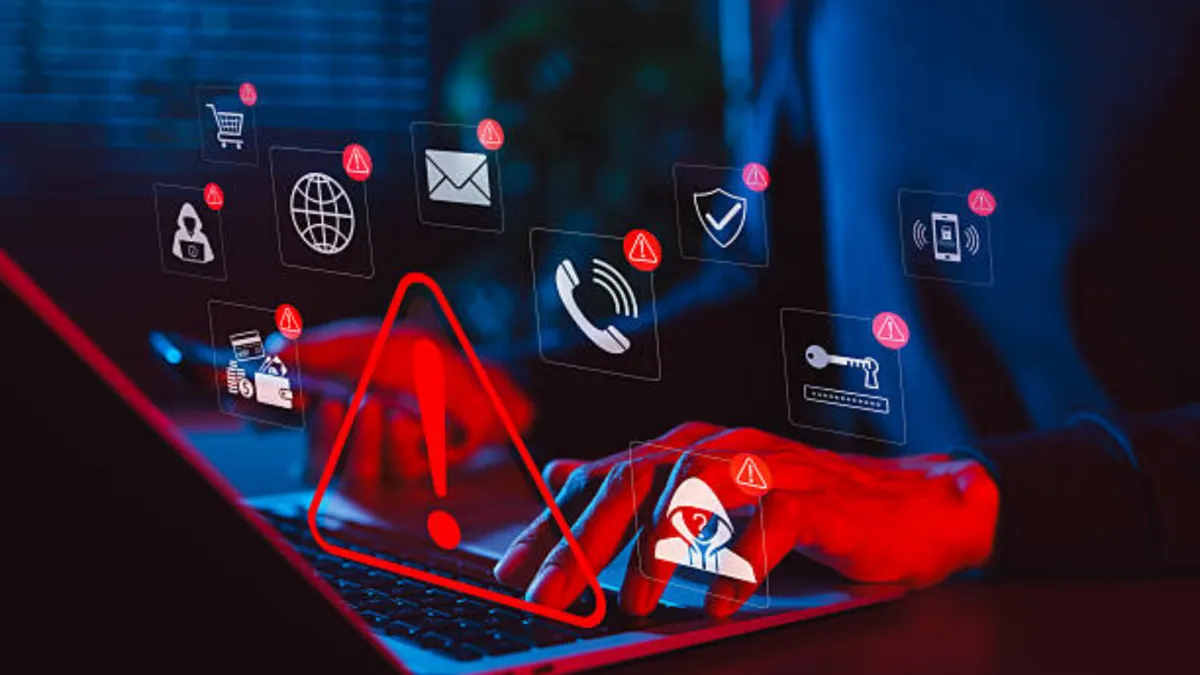
AI-Powered Cyber Threats Are Here. Is Your Business Ready?
CYBERSECURITY ALERT
AI-Powered Cyber Threats Are Here. Is Your Business Ready?
The same AI capabilities powering your productivity tools are being weaponized by adversaries. Here's what the threat landscape actually looks like in 2026 — and what you can do about it.
AI didn't just improve cyberattacks — it fundamentally changed the economics of them. Attacks that used to require a skilled team working for weeks can now be automated and executed by a single bad actor with a laptop. The threat surface just got exponentially larger.
The Five AI-Powered Threats Every Business Faces
1. Hyper-Personalized Phishing at Scale
AI can write phishing emails indistinguishable from your CEO's actual writing style — referencing real projects, real colleagues, real context scraped from LinkedIn. These aren't the typo-filled emails of years past. They're frighteningly convincing and can be generated by the thousands in minutes.
2. Deepfake Voice and Video Fraud
Attackers are cloning executives' voices with as little as 30 seconds of audio from a YouTube video. Finance teams have been tricked into wiring millions to fraudulent accounts by fake 'CEO' phone calls. Video deepfakes are now accessible to non-technical attackers through off-the-shelf tools.
3. AI-Accelerated Vulnerability Discovery
AI can scan codebases and network configurations to find exploitable vulnerabilities faster than human security teams can patch them. The window between vulnerability discovery and active exploitation has shrunk dramatically.
4. Automated Social Engineering
AI agents can conduct sustained, multi-touch social engineering campaigns — building relationships with targets over weeks before making an ask. They can manage hundreds of 'relationships' simultaneously, adapting their approach in real time.
5. Polymorphic Malware
AI-generated malware rewrites its own code to evade signature-based detection while maintaining its malicious function — a moving target that legacy security tools weren't built for.
In 2024, AI-assisted phishing attacks increased by 1,265% according to cybersecurity researchers. The 2026 numbers are expected to be significantly higher.
Three Things to Do Right Now
•Audit your email security posture — SPF/DKIM/DMARC configurations still stop the majority of impersonation attacks
•Implement a verbal verification protocol for all financial transactions — never rely on email alone
•Assess your AI security stack — legacy tools weren't built for AI-powered attacks
Get a security assessment from CyberDogs AI. We'll identify your vulnerabilities before attackers do.
Visit: https://cyberdogs.ai/contact
